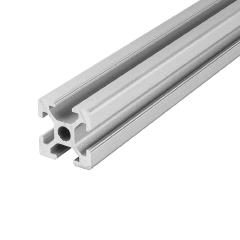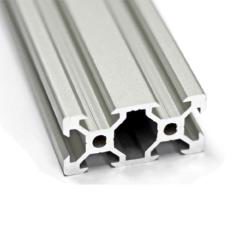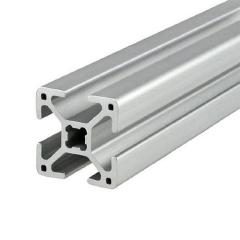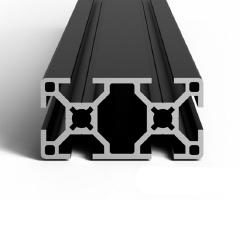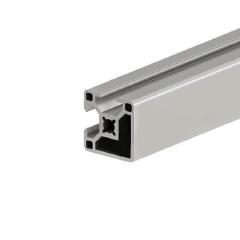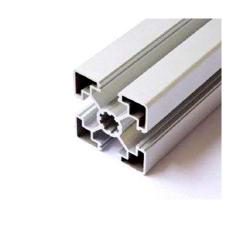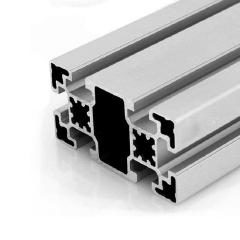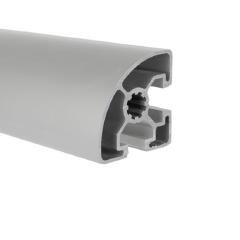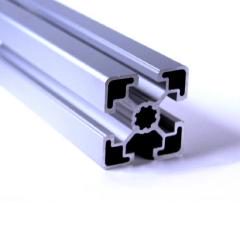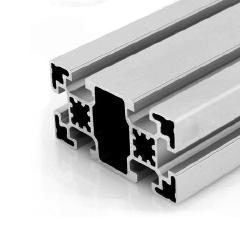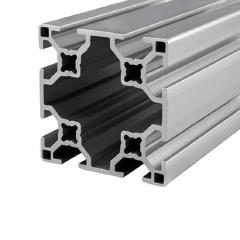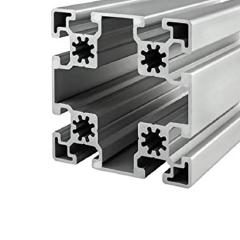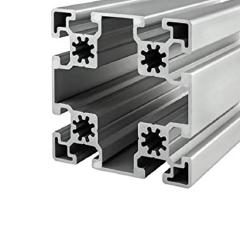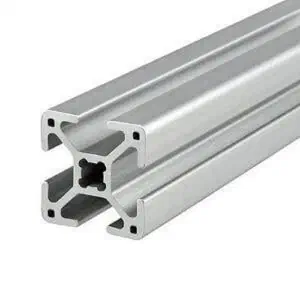
Structural aluminium profiles formed by forcing heated alloy billets through shaped dies to produce continuous cross-sections. T-slot variants enable modular framing for machines, enclosures, and automation equipment without welding or drilling.
Aluminium extrusions solve several engineering challenges in structural design and machine building. Traditional steel framing requires welding, drilling, and heavy tooling, making reconfiguration costly and time-consuming. T-slot extrusions eliminate these constraints by allowing fasteners and accessories to be positioned at any point along the profile channel, enabling rapid assembly and modification with standard hand tools. The low density of aluminium (~2.7 g/cm³) reduces structural weight by approximately 65% compared to equivalent steel sections, lowering shipping costs and easing installation. Anodised and mill finishes provide corrosion resistance without additional painting, reducing maintenance in humid or washdown environments. The modular nature of extrusion profiles also supports iterative prototyping — structures can be disassembled, reconfigured, and reused without material waste, addressing both cost and sustainability concerns in manufacturing and R&D operations.
Aluminium extrusion profiles are used across industries that require lightweight, rigid, and reconfigurable structural framing.