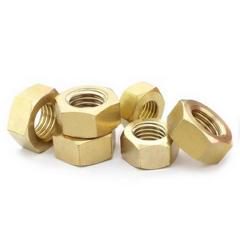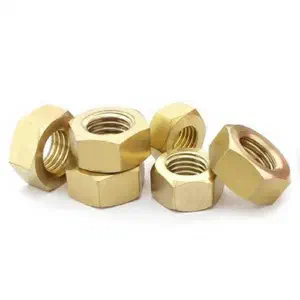
Hex Nut Brass
Copper-zinc brass hex nut conforming to ISO 4032 / DIN 934 dimensions, providing corrosion resistance, electrical conductivity, and non-magnetic properties. Typically manufactured from free-cutting brass C360 (CZ121) or naval brass C464.
Specification
#
Standard
ISO 4032 / DIN 934 (dimensions), ASTM B16 (material), AS 1112 (Australian)
Material
Free-Cutting Brass C360 (CZ121/CW614N), Naval Brass C464, Architectural Brass C385
Surface Finish
Natural Brass, Polished, Nickel Plated, Chrome Plated, Lacquered
Thread Type
Metric Coarse (standard), UNC (inch series), BSP (pipe thread applications)
Drive Type
Hexagon (wrench/spanner/socket)
Head Type
Hexagon, standard pattern
Grade
Not class-rated per ISO 898; typical tensile strength 340-500 MPa depending on alloy and temper
Thread
Coarse (standard)
Coating
Plain
Stock
In stock
Dimension
#
Size
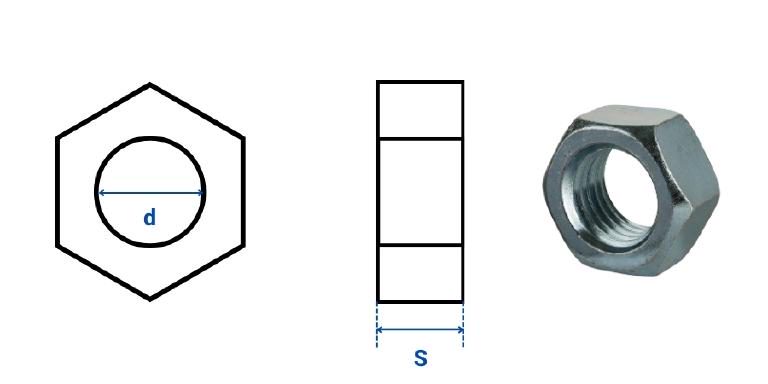
Thread Dia (min-max mm)
Pitch
Height (mm)
M5
4.83-5.00
0.8
4.7
M6
5.79-6.00
1.0
5.2
M8
7.76-8.00
1.25
6.8
M10
9.74-10.00
1.5
8.4
M12
11.71-12.00
1.75
10.8
- All dimensions in mm, tolerance +/- 0.01 mm. Additional dimensions available on request.
Benefits
#
Brass hex nuts address engineering requirements where material properties take priority over mechanical strength. In electrical installations, their conductivity ensures reliable grounding and terminal connections without introducing dissimilar metal junctions. The inherent corrosion resistance of copper-zinc alloys eliminates the need for protective coatings in atmospheric, freshwater, and mild marine environments, reducing maintenance requirements. Non-magnetic properties make brass hex nuts essential for instrumentation, electronic assemblies, and MRI-compatible equipment where ferromagnetic fasteners would interfere with sensitive measurements. The naturally antimicrobial surface of brass alloys meets hygiene requirements in food processing, pharmaceutical, and marine water systems. Free-cutting brass C360 offers machinability rated at 100 on the reference scale, enabling cost-effective production of precision threaded components. For architectural and decorative applications, the golden appearance provides an aesthetic finish without additional plating.
Common Applications
#
Brass hex nuts are specified where corrosion resistance, conductivity, or non-magnetic properties are the primary design drivers.
- Electrical fittings, terminals, and grounding connections
- Plumbing valve assemblies and pipe fittings
- Marine hardware and boat fittings
- HVAC equipment and air handling units
- Decorative and architectural hardware
- Food and beverage processing equipment
- Instrumentation and control panels
- Musical instrument hardware
- Electrical switchgear and busbar systems
- Lighting fixture assembly
Read Me
| Standard | ISO 4032 / DIN 934 (dimensions), ASTM B16 (material), AS 1112 (Australian) |
| Material | Free-Cutting Brass C360 (CZ121/CW614N), Naval Brass C464, Architectural Brass C385 |
| Surface Finish | Natural Brass, Polished, Nickel Plated, Chrome Plated, Lacquered |
| Thread Type | Metric Coarse (standard), UNC (inch series), BSP (pipe thread applications) |
| Drive Type | Hexagon (wrench/spanner/socket) |
| Head Type | Hexagon, standard pattern |
| Grade | Not class-rated per ISO 898; typical tensile strength 340-500 MPa depending on alloy and temper |
| Thread | Coarse (standard) |
| Coating | Plain |
| Stock | In stock |
| Size | Thread Dia (min-max mm) | Pitch | Height (mm) |
|---|---|---|---|
| M5 | 4.83-5.00 | 0.8 | 4.7 |
| M6 | 5.79-6.00 | 1.0 | 5.2 |
| M8 | 7.76-8.00 | 1.25 | 6.8 |
| M10 | 9.74-10.00 | 1.5 | 8.4 |
| M12 | 11.71-12.00 | 1.75 | 10.8 |