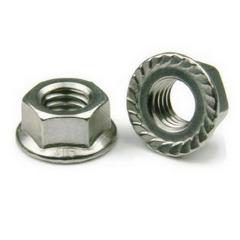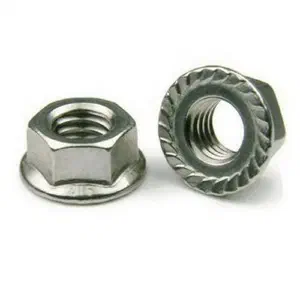
Flange Nut
Hexagon nut with an integral circular flange for wider load distribution, manufactured to DIN 6923 / ISO 4161. Available in serrated (locking) and non-serrated variants, eliminating the need for a separate flat washer.
Specification
#
Standard
DIN 6923 / DIN EN 1661 / ISO 4161 (serrated); ISO 1661 (non-serrated)
Material
Carbon Steel, Stainless Steel A2 (304), Stainless Steel A4 (316)
Surface Finish
Zinc Plated, Hot-Dip Galvanized, Dacromet, Zinc-Nickel, Plain (stainless)
Thread Type
Metric Coarse (standard), UNC (inch series per ASME B18.2.2)
Drive Type
Hexagon (wrench/spanner/socket)
Head Type
Hexagon with integral flange (serrated or non-serrated)
Grade
Class 6, 8, 10 (steel per ISO 898-2); A2-70, A4-70 (stainless per ISO 3506-2)
Thread
Coarse (standard)
Coating
Zinc plated
Stock
In stock
Dimension
#
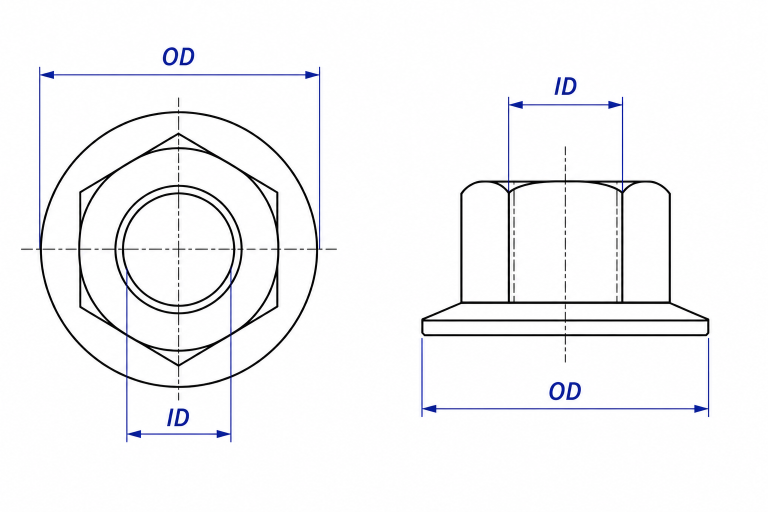
Size
Thread Dia (min-max mm)
Pitch
Height (mm)
M6
5.79-6.00
1.0
6
M8
7.76-8.00
1.25
8
M10
9.74-10.00
1.5
10
M12
11.71-12.00
1.75
12
M16
15.68-16.00
2.0
16
- All dimensions in mm, tolerance +/- 0.01 mm. Additional dimensions available on request.
Benefits
#
Flange nuts eliminate the need for a separate flat washer by integrating a wide bearing surface directly into the nut body, reducing part count and assembly time in production environments. The flange distributes clamping force over a larger area, lowering surface pressure on thin sheet metal, plastics, and soft materials that would otherwise deform or crush under a standard hex nut. The serrated variant adds vibration resistance through angled teeth that bite into the mating surface, providing a locking action comparable to separate lock washers without additional hardware. This combination of load distribution and vibration resistance in a single component simplifies bill of materials and reduces inventory. For high-volume automotive and appliance assembly, the integrated design also lowers installed cost compared to purchasing and handling separate nuts and washers. The flange additionally protects the bolted component surface from wrench damage during installation.
Common Applications
#
Flange nuts are widely used in industries where assembly speed, part count reduction, and load distribution on thin materials are priorities.
- Automotive body, chassis, and engine component assembly
- Electrical enclosures and control panel mounting
- Sheet metal fabrication and assembly
- Appliance manufacturing
- HVAC ductwork and mechanical services
- Solar panel mounting systems
- Furniture and fixture assembly
- Metal framing and stud systems
- Agricultural and construction equipment
- Plastic and composite material fastening
Read Me
| Standard | DIN 6923 / DIN EN 1661 / ISO 4161 (serrated); ISO 1661 (non-serrated) |
| Material | Carbon Steel, Stainless Steel A2 (304), Stainless Steel A4 (316) |
| Surface Finish | Zinc Plated, Hot-Dip Galvanized, Dacromet, Zinc-Nickel, Plain (stainless) |
| Thread Type | Metric Coarse (standard), UNC (inch series per ASME B18.2.2) |
| Drive Type | Hexagon (wrench/spanner/socket) |
| Head Type | Hexagon with integral flange (serrated or non-serrated) |
| Grade | Class 6, 8, 10 (steel per ISO 898-2); A2-70, A4-70 (stainless per ISO 3506-2) |
| Thread | Coarse (standard) |
| Coating | Zinc plated |
| Stock | In stock |
| Size | Thread Dia (min-max mm) | Pitch | Height (mm) |
|---|---|---|---|
| M6 | 5.79-6.00 | 1.0 | 6 |
| M8 | 7.76-8.00 | 1.25 | 8 |
| M10 | 9.74-10.00 | 1.5 | 10 |
| M12 | 11.71-12.00 | 1.75 | 12 |
| M16 | 15.68-16.00 | 2.0 | 16 |